Water Managed Before It Damages Your Property
Drainage Solutions in Savannah for properties with standing water, foundation threats, and erosion from poor water management
Savannah's seasonal rainfall and flat terrain create conditions where water pools against foundations, floods low-lying yard areas, or erodes driveways and landscaping when drainage systems are absent or inadequate. Poor drainage accelerates foundation settling, kills vegetation in saturated zones, and makes outdoor spaces unusable after storms. Delta Earthworks designs drainage solutions based on property layout, soil conditions, and water flow patterns observed during site evaluation, using grading improvements, swales, and drainage installations that direct water away from structures and problem areas.
Drainage work addresses both surface water that pools visibly and subsurface water that saturates soil without obvious standing water. Solutions include regrading to establish slope that moves water toward appropriate discharge points, installation of French drains or catch basins that collect and redirect subsurface flow, construction of swales that channel surface runoff, and integration with existing site features to avoid creating new problems downstream.
Schedule a drainage assessment to identify water sources, flow paths, and solutions tailored to your property's topography and problem areas.
What Effective Drainage Systems Accomplish
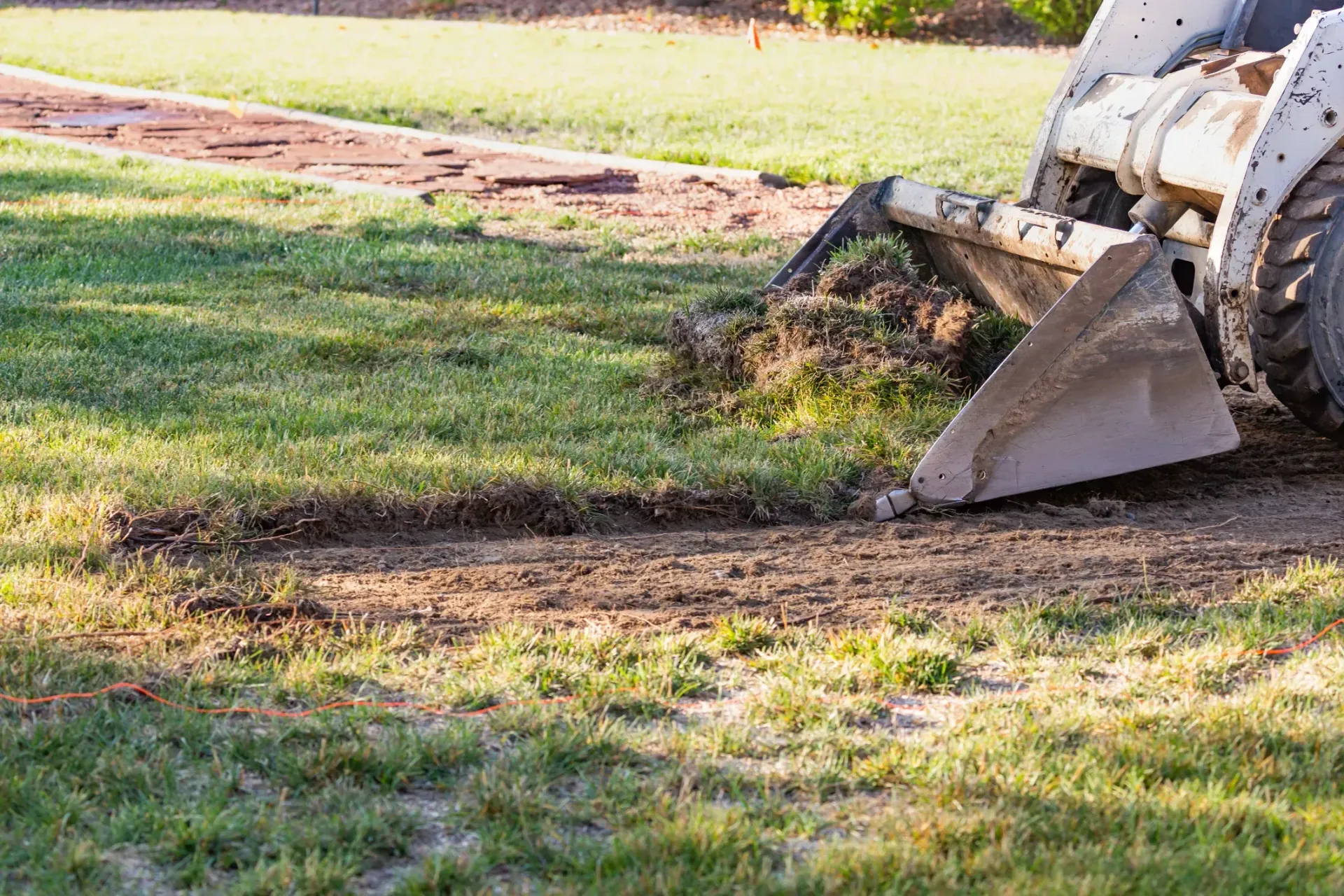
Drainage solutions begin with site evaluation that maps where water enters, where it collects, and where it needs to go. Grading changes redirect surface flow before it reaches problem areas, while subsurface drains intercept water moving through soil layers that saturate foundations or low spots. In properties with complex drainage issues, multiple strategies work together—swales handle large volumes of surface runoff, French drains manage subsurface water around foundations, and regrading ensures water moves consistently toward discharge points rather than reversing direction or stalling in flat areas.
Once drainage improvements are complete, standing water disappears from areas where it previously pooled, foundations stay dry without moisture wicking into crawlspaces or basements, and driveways and walkways remain intact without erosion channels forming alongside them. You'll notice yards dry faster after rain, landscaping thrives without root rot from oversaturation, and outdoor spaces become usable sooner following storms. Long-term benefits include reduced foundation movement, extended life for hardscaping and paved surfaces, and elimination of mosquito breeding sites that form in stagnant water.
Drainage projects at Delta Earthworks are customized rather than templated—no two properties have identical water issues, so solutions vary based on what's causing the problem and what outcomes you need. Work may involve minor regrading and a single drainage line, or comprehensive site reshaping with multiple drainage structures and discharge management. Projects are planned to integrate with existing landscaping, utilities, and site features without creating conflicts or requiring removal of elements you want to preserve.
Answers About Property Drainage Work
Property owners dealing with water problems often ask how drainage is designed, what methods work for different conditions, and how quickly results become visible.
What causes standing water on properties in Savannah?
Flat terrain, heavy clay soils with slow percolation rates, and inadequate site grading combine to trap water in low areas where it has no natural path to drain away from structures or landscaping.
How do swales differ from underground drainage systems?
Swales are graded channels that move surface water visibly across the landscape toward discharge points, while underground drains collect subsurface water through perforated pipe and discharge it away from problem areas without visible flow.
Why does proper drainage require site evaluation first?
Water behavior depends on topography, soil type, existing grades, and sources of inflow—solutions that work in one area may fail elsewhere without assessment that identifies your property's specific conditions and constraints.
What's involved in regrading for drainage?
Regrading reshapes site contours to establish positive slope away from foundations and toward drainage paths, using earthmoving equipment to adjust elevations and create consistent flow without creating new low spots.
When do drainage improvements show results?
Surface drainage changes become visible immediately after installation as water follows new grading during the next rainfall, while subsurface systems show results as soil moisture levels drop and previously saturated areas dry out over subsequent weeks.
Delta Earthworks evaluates drainage problems and develops solutions that address root causes rather than symptoms. Contact us to schedule a property assessment and discuss grading adjustments, drainage installations, or water management strategies that eliminate standing water and protect your property long-term.