Foundations Built on Accurate Depth and Placement
Excavation in Savannah for new construction, additions, utilities, and drainage systems requiring precise soil removal
Accurate excavation determines whether foundations settle evenly, utility lines function without strain, and drainage systems move water away from structures as designed. Delta Earthworks handles excavation for new construction, home additions, utility trenching, and site development across Savannah, Guyton, Richmond Hill, and surrounding areas where soil composition ranges from sandy loam near tidal areas to clay deposits farther inland that require different excavation approaches. When excavation depth misses engineered specifications by even six inches, foundation footers rest on unstable soil layers, basement walls experience uneven pressure, and drainage pipes slope incorrectly.
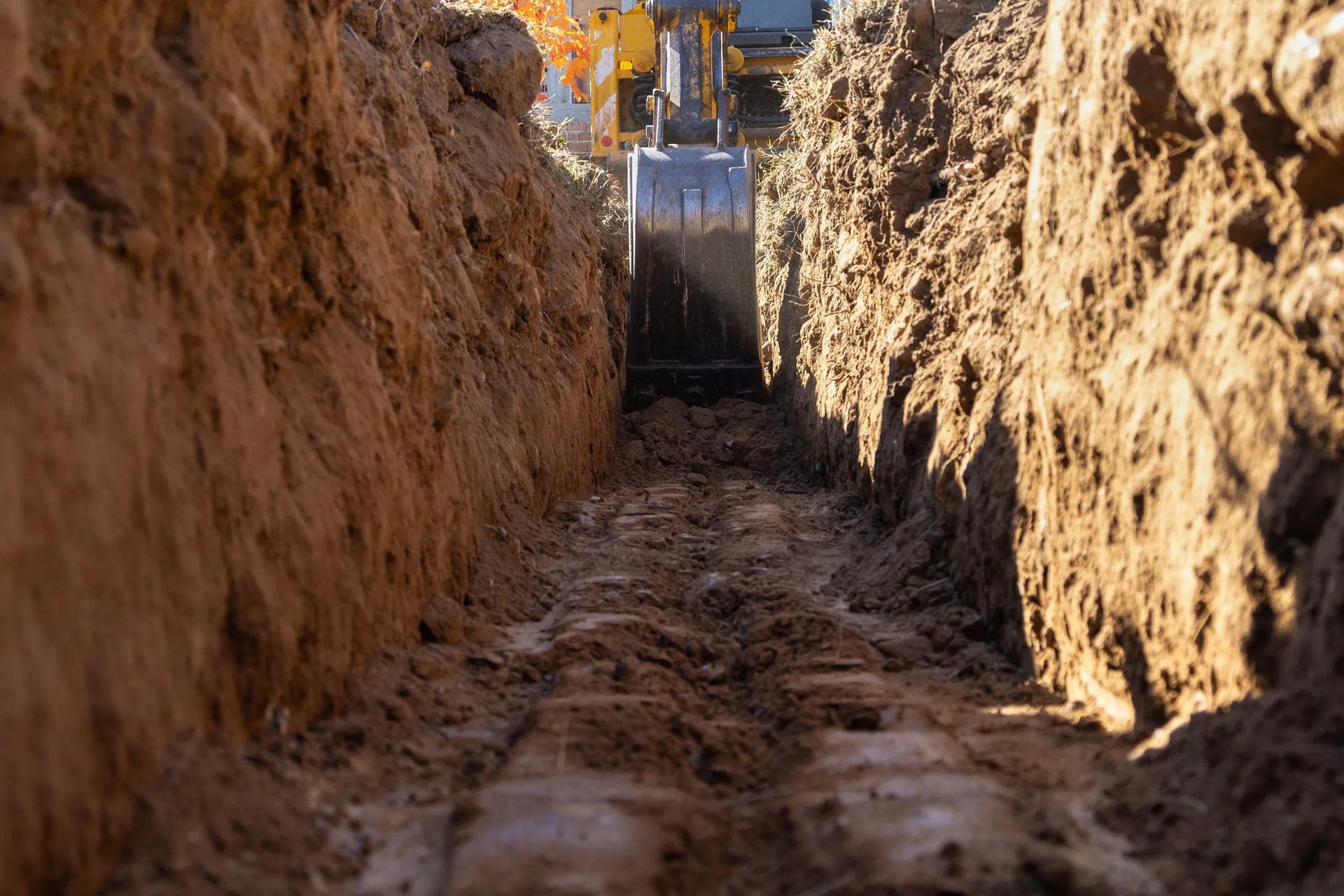
The excavation process involves removing soil to depths and dimensions specified in construction plans, managing excavated material for reuse or removal, and maintaining safe trench walls that do not collapse during utility installation. Modern excavators equipped with grade control technology maintain elevation accuracy within inches across large sites, which matters when footer depths must remain consistent to prevent differential settling. Operators assess soil type during excavation to identify layers where bearing capacity changes, alerting engineers when conditions differ from initial soil reports.
Request an excavation consultation before beginning construction to review site-specific soil conditions and equipment access requirements.
How Excavation Addresses Foundation Stability
Professional excavation removes soil to engineered depths that reach stable bearing layers capable of supporting structural loads without excessive settling, while preserving sidewall integrity that prevents cave-ins during concrete pours. Excavators equipped with GPS-guided buckets maintain footer trench depths within tight tolerances, which ensures concrete footers rest on uniform soil bearing capacity across the entire foundation perimeter. Soil management during excavation involves stockpiling topsoil for later landscaping use, removing unsuitable clay or organic material that compresses under load, and backfilling around foundations with engineered fill compacted in controlled lifts.
After excavation completes, you notice level building pads where slopes previously existed, trenches cut to exact utility depths, and cleanly defined foundation perimeters ready for footer forms and reinforcement placement. Proper excavation creates working space around foundation walls for waterproofing application and drainage installation, prevents soil mixing that weakens bearing capacity, and establishes drainage slopes that move surface water away from the structure.
Safe excavation practices include locating underground utilities before digging begins, shoring trench walls deeper than five feet to prevent collapse, and monitoring groundwater infiltration that softens bearing soils in Savannah's high water table areas. Projects in low-lying coastal zones may require dewatering pumps during excavation to keep trenches dry enough for concrete placement and utility installation.
Answers to Frequent Service Questions
Excavation planning accounts for soil type, site access, and utility locations that affect equipment selection and project timelines.
What happens to the soil removed during excavation?
Excavated soil is stockpiled on-site for later backfilling and grading or hauled away if unsuitable for reuse, depending on soil composition and project specifications. Sandy soils common near Savannah often drain well and can be reused for backfill, while heavy clay soils may require replacement with engineered fill.
How is excavation depth verified during the project?
Operators use laser levels and GPS-guided equipment to maintain excavation depths within inches of plan specifications, with periodic measurements confirming that footer trenches, utility lines, and drainage grades match engineering requirements. Foundation inspectors verify depths before concrete placement proceeds.
When does excavation require shoring or trench protection?
Trenches deeper than five feet require protective systems that prevent sidewall collapse, particularly in sandy soils that lose cohesion when disturbed. Shoring becomes critical when workers enter trenches to install utilities, set forms, or place reinforcement.
What site conditions affect excavation equipment selection?
Soil hardness, moisture content, proximity to existing structures, and site access width determine whether projects require compact excavators for tight spaces or larger machines for deep foundation excavations. Properties with limited access may need equipment transported in sections or smaller machines that take longer but fit through narrow gates.
Why does accurate excavation matter for utility installation?
Utility lines require specific burial depths and slopes to function correctly—water lines must slope toward drain points, sewer lines need consistent fall for gravity flow, and electrical conduits require depth that protects against accidental damage. Excavation errors that place utilities too shallow or too deep create costly rework and code violations.
Delta Earthworks coordinates excavation scheduling with construction timelines and weather conditions to maintain safe, efficient operations. Arrange an on-site assessment to evaluate soil conditions and access routes before excavation equipment mobilizes to your property.