Soil Stabilization That Reduces Runoff Impact
Erosion Control in Savannah for construction sites, slopes, drainage areas, and properties experiencing soil loss during rain events
Savannah's subtropical climate delivers intense rainfall that moves exposed soil downslope, into drainage systems, and onto neighboring properties when erosion control measures are absent or fail during storm events. Erosion undermines foundations by washing away supporting soil, clogs drainage pipes with sediment that reduces capacity, and creates gullies across yards that worsen with each rain until expensive regrading becomes necessary. Delta Earthworks installs erosion control solutions designed to stabilize soil and reduce runoff velocity on construction sites, residential slopes, drainage corridors, and developed properties where vegetation loss or soil disturbance has created erosion pathways.
Erosion control involves reducing water velocity across vulnerable surfaces, anchoring soil with physical barriers or vegetation, and redirecting concentrated flows that cut channels through exposed ground. Methods range from silt fencing that captures sediment at site boundaries to erosion control blankets that protect slopes during vegetation establishment, with selection based on slope steepness, soil type, and how long surfaces will remain exposed. Construction sites require temporary controls that function immediately after installation, while permanent solutions emphasize vegetative cover that stabilizes soil long-term.
Discuss erosion concerns before they create larger problems requiring extensive soil replacement and landscape reconstruction in Savannah, Guyton, Richmond Hill, and surrounding areas.
What Erosion Control Actually Accomplishes
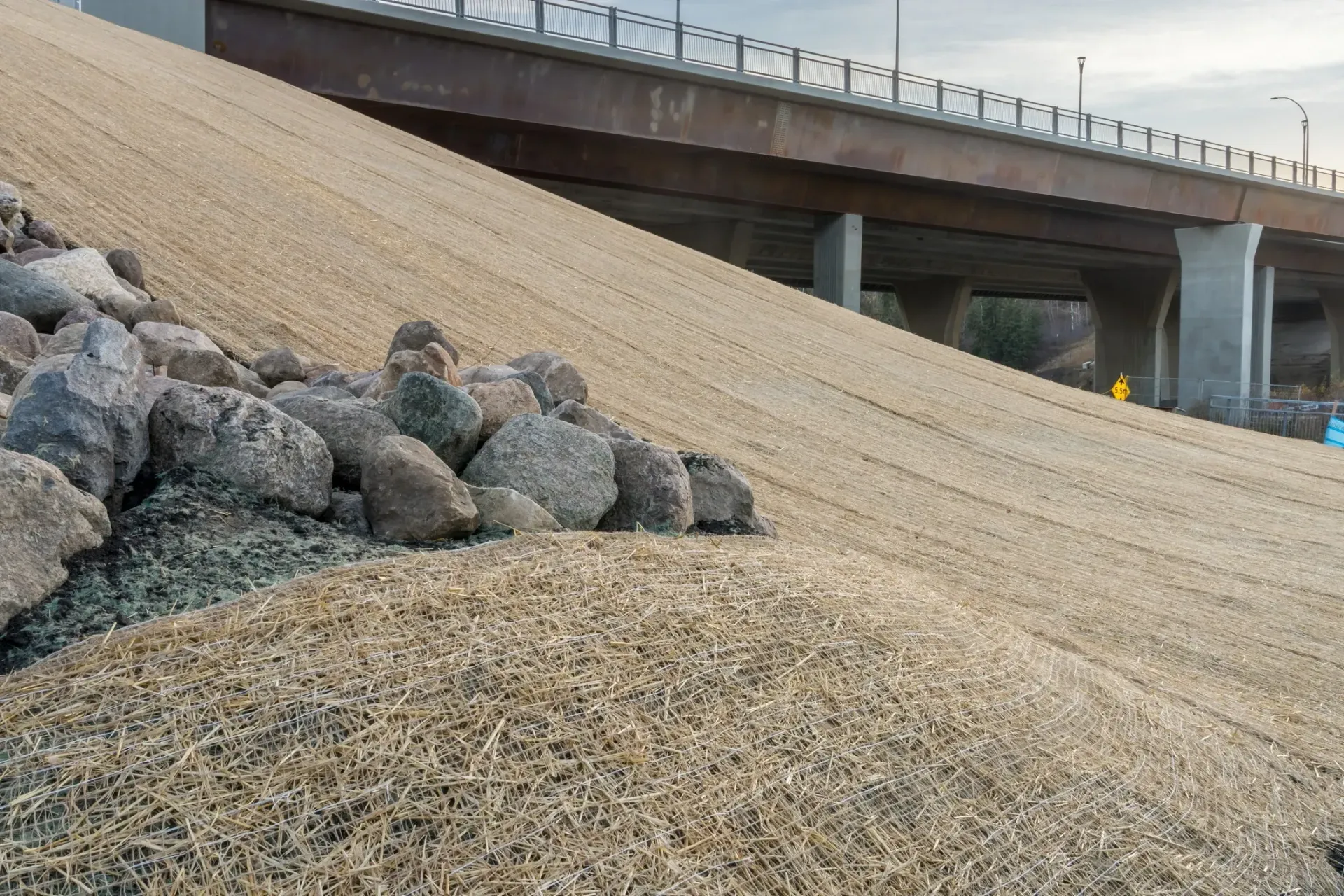
Effective erosion control captures sediment before it leaves the property, slows runoff to rates that prevent channel formation, and maintains soil in place until vegetation establishes root systems that provide natural stabilization. Silt fencing installed along downslope property boundaries filters sediment from runoff while allowing water to pass through at reduced velocity, preventing concentrated discharge that erodes neighboring properties. Erosion control blankets made from biodegradable materials protect slopes during seed germination, anchoring soil against rainfall impact while grass roots develop the network needed to resist erosion forces permanently.
After erosion control installation, you notice soil remaining in place during rainstorms instead of washing into drainage swales, clear water flowing through silt fencing rather than sediment-laden runoff leaving the site, and vegetation establishing on slopes without washouts exposing bare soil. Protected areas maintain original grades rather than developing ruts and channels, planted slopes develop uniform grass coverage instead of patchy growth where erosion removed topsoil, and drainage structures remain functional instead of clogging with sediment.
Customized erosion control plans account for factors including slope length and steepness, expected rainfall intensity, soil erodibility, and time until permanent vegetation coverage matures. Coastal Georgia properties often require more robust controls due to sandy soils that erode easily and intense convective storms that produce high-velocity runoff capable of overwhelming undersized erosion barriers.
What Property Owners Usually Ask
Erosion control effectiveness depends on matching methods to site-specific conditions and maintaining installations through weather events.
What causes erosion to worsen over time if left unaddressed?
Initial erosion creates channels that concentrate runoff into narrow flows with higher velocity, which cuts deeper into soil and widens erosion paths with each subsequent rain. Without intervention, small ruts evolve into gullies that require mechanical repair and extensive soil replacement to correct.
How does erosion control protect construction sites?
Silt fencing, sediment traps, and stabilized construction entrances prevent soil from leaving the property during active construction when vegetation has been removed and ground surfaces are disturbed daily by equipment traffic. These controls keep sediment on-site where it can be managed rather than flowing into storm drains or adjacent properties.
When should erosion control be installed during development projects?
Controls must be in place before clearing and grading begin, providing immediate protection when soil becomes exposed. Early installation prevents initial erosion that establishes flow paths and allows controls to function throughout construction rather than attempting to stabilize already-eroded areas.
What determines whether temporary or permanent erosion control is needed?
Construction sites require temporary controls that function during the building period and can be removed after landscaping establishes, while properties with ongoing erosion problems need permanent solutions including retaining structures, drainage improvements, and vegetation that provides long-term stabilization. Steep slopes often require both temporary and permanent measures.
Why do some erosion control methods fail during heavy rainfall?
Undersized installations, improper anchoring that allows water to flow beneath barriers, and lack of maintenance cause failures when storm intensity exceeds design capacity. In Savannah, controls must account for tropical storm rainfall rates that can exceed several inches per hour during peak periods.
Delta Earthworks designs erosion control systems based on your site's slope conditions, soil characteristics, and exposure duration, ensuring protection remains effective through seasonal weather patterns. Schedule a site assessment to identify erosion risks and develop preventative measures before soil loss accelerates and repair costs increase.